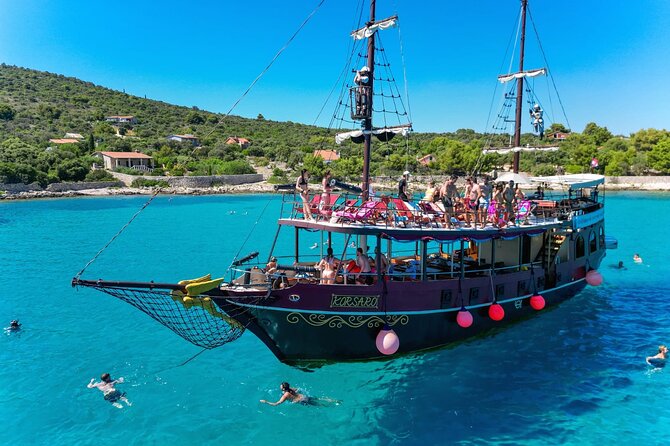
Boat tour from Split
Use this if you already have a cruise or boat ticket. Blue Lagoon is reached by water, and the departure point depends on your operator.
- Split departure
- Voucher meeting point
- No land entrance
Blue Lagoon (Krknjaši) is reached by boat from Split, not by street address. This guide shows where to meet, which side of the bay matters, how to get to the departure area, and what to check before you leave your hotel.
For most visitors, the simplest plan is a boat booking from Split. The bay itself has no street entrance, so the real task is reaching the right pier on time.
Use this if you already have a cruise or boat ticket. Blue Lagoon is reached by water, and the departure point depends on your operator.
This works if your stay is near the Riva or the port area. It is the easiest last stretch if your boat leaves from the city centre.
Use a taxi if you are arriving from a hotel with bags, children, or limited time. Ask for the exact meeting point, not only “Split harbour”.
Use a bus when you are staying outside the old town and need to reach the waterfront first. After that, follow the walking route to your pier.
If you are already in central Split, the easiest plan is to stay within walking distance of the port. That removes stress on departure day.
Use this only if you are arriving on the same day. The bay is not at the airport, so you still need a separate ride to Split.
This is the safest option when the cruise company names a stand, pier, or harbour address. The meeting point is the thing that matters, not the area name.
Blue Lagoon (Krknjaši) has no visitor door on land. Your real entrance is the boat meeting point in Split, and that can change by operator and ticket.
The booking ticket is the source that matters. One operator may use a stand on the Riva, another a pier on the harbour edge.
Some cruises use a different side of the waterfront or a different check-in point for group boarding. That detail belongs to the product, not the destination.
“Blue Lagoon” is the place. Your slot is at the exact pier, stand, or harbour point on your booking. If those do not match, stop and check the ticket before queuing.
The bay itself has no public bus stop. Use city buses to reach Split centre, then walk to the port or take a taxi for the last stretch.
Take any bus that drops you in central Split, then follow your booking instructions to the pier. The useful question is not the bus number; it is how close it gets you to the port.
If your hotel is away from the centre, a bus can cut the cost of the first leg. It is best when you travel light and still have time for a short walk after you get off.
Bus travel is more exposed to delays than a taxi or a walk. Use live service information on the day, especially if you are leaving during rush hour or when roads are busy.
These are route-planning patterns, not minute-by-minute promises. Use your live ticket and the operator’s meeting point as the final authority on the day.
| Starting point | Simple route | Why it works | Final step |
|---|---|---|---|
| Split Riva | Walk to your pier or stand | Direct, no transfer | Find the exact boarding point on your voucher. |
| Split port area | Short walk or taxi | Normally faster than looking for parking | Check the pier number before you queue. |
| Split Old Town | Walk to the waterfront, then board | Good if you travel light | Use the harbour-side meeting point, not the city centre name. |
| Hotel in central Split | Taxi to the meeting pier | Direct, no transfer | Show the driver the exact stand or pier. |
| Outside central Split | Bus into the centre, then walk | Usually cheaper than a full taxi ride | Finish on foot at the booked boarding point. |
| Split Airport area | Transfer or taxi into Split first | Best for travellers with bags | Allow time for the final port walk after arrival. |
The simplest connection is to reach Split first, then continue to the exact pier named on your boat ticket. The bay itself does not have an airport link.
Use the airport’s public transport options to reach Split, then switch to the meeting point on your voucher. This works best if you are not carrying much luggage.
This is the easiest choice with bags, children, or a late arrival. Show the driver the pier, stand, or harbour address from your voucher.
Plane delays, baggage, the ride into Split, and the walk to the pier all take time. If you land on the same day, build in a wide margin and keep your luggage plan simple.
Leave the rail station area with the port or waterfront in mind. Do not start by hunting for the boat from the train platform.
Walk or take a taxi depending on your bags and time. The right goal is the booked stand or pier, not the general Split waterfront.
When you reach the waterfront, check the exact boarding point again. The name of the bay is not enough to board the right boat.
Walking is often the cleanest last step, but heat, crowds, traffic lights, and the size of the harbour can make the route feel longer than a map pin suggests.
This is the easiest route if you are already staying in the centre. The path is simple, flat in places, and easy to follow when you stay near the seafront.
It can be a straightforward walk, but summer heat and crossing busy streets slow it down. Use it only if you are comfortable with bags and do not need a rush.
Getting close is easy. Parking and drop-off can be the part that slows you down, so plan that before you leave.
Tell the driver the boarding point from your voucher, not just “Split port”. That reduces the chance of being dropped at the wrong side of the waterfront.
Do not assume the cruise pick-up point has dedicated parking. If you drive, choose a public car park in advance and then walk the last stretch.
A map pin does not always equal a legal stopping point. If the driver cannot stop right beside the pier, use the nearest safe drop-off and finish on foot.
A nearby stop does not prove step-free access. The pier, gangway, and boat ladder may differ from one operator to another.
Check whether your path from the station, hotel, or taxi drop-off to the pier is step-free. Even a short route can include stairs or uneven paving.
Ask whether the stand or pier has a level approach. If not, request the easiest boarding side before you travel.
Confirm how you board the vessel. Steps, ladders, and wet decks are common on boat trips, so the operator’s current access note matters.
Tell the operator before arrival if you need help with boarding, seating, or luggage. Do not wait until you reach the quay.
For a boat departure, the main risk is not security screening at a museum door. It is missing the right stand, carrying too much, or not having the voucher ready when boarding starts.
Keep the ticket, pier name, and meeting time on your phone before you leave the hotel. Mobile signal is not something you want to depend on at the quay.
Pack light so you can move through Split waterfront streets and any boarding queue without trouble. Large cases slow you down and make the pier walk harder.
What you can carry onboard depends on the boat and ticket. Check your booking for the current rule instead of assuming every cruise allows the same items.
Save the voucher, pier note, and contact details before you leave the hotel. Do it while you still have Wi-Fi and enough battery to show the booking without searching your inbox.
Work backwards from the time on the voucher. The harbour walk, check-in, and boarding can all take longer than the map makes it look.
Your arrival deadline is the meeting point on the ticket, not the general Split area. Allow extra time for finding the stand, the pier, and the boarding queue.
If the operator gives a meeting time, treat that as the moment to be there. Do not plan to arrive after the group has already started gathering.
Street names, pier numbers, and the booking note matter more than a distant view. If those do not match, stop before you queue.
If your booking says the Riva, you need the waterfront side where the operator has marked the stand or pier. The name of the promenade does not tell you the boarding point by itself.
The number printed on your voucher is the clearest sign that you are in the right place. It matters more than the tour name or the boat’s destination.
Boat departures happen at the waterfront, so inland streets can put you on the wrong side of the block. If you are not near the water, stop and re-check the map.
A stand number is a stronger clue than a general attraction name. If your booking names Stand 7 or another exact point, go there instead of joining the nearest queue.
Blue Lagoon cruises look similar from a distance. A different route, boat, or check-in point can still be the wrong product for your ticket.
A correct route only works if you reach the right pier on time. These last checks stop the common mistakes that waste a boat departure.
Use the latest voucher or operator message, not an old calendar note or screenshot from another trip.
Keep the pier, stand, or harbour note ready offline so you can show it if the map fails.
Buses and roads can change with traffic, works, or events. Recheck before you leave your hotel.
Carry only what you can manage quickly, especially if your booking point is on the waterfront.
Do not depend on search or roaming when you are standing at the quay with other travellers waiting.
You may need the voucher, a map, and a message from the operator at the same time.
Use the exact stand, pier, or meeting note on your ticket. Blue Lagoon is the place, but the meeting point is the one that gets you onboard.
For most visitors, the easiest path is taxi or a short walk from central Split. Use public transport only if it still leaves you close to the waterfront.
Build in time for the last walk, check-in, and boarding queue. That is the part that turns a plan into a departure.